
Account abstraction is the redesign of how blockchain accounts work: instead of every wallet being a rigid keypair that must hold the native token and sign every action itself, accounts become programmable smart contracts that can define their own rules for validation, payment and recovery. ERC-4337 made this deployable on Ethereum and every EVM chain without changing the protocol, and it’s the reason “gasless” onboarding, paying fees in stablecoins, and wallets without seed phrases went from conference talks to shipping products. Here’s how the machinery actually works, in the order a builder needs it.
The problem: EOAs were designed in 2015 and it shows
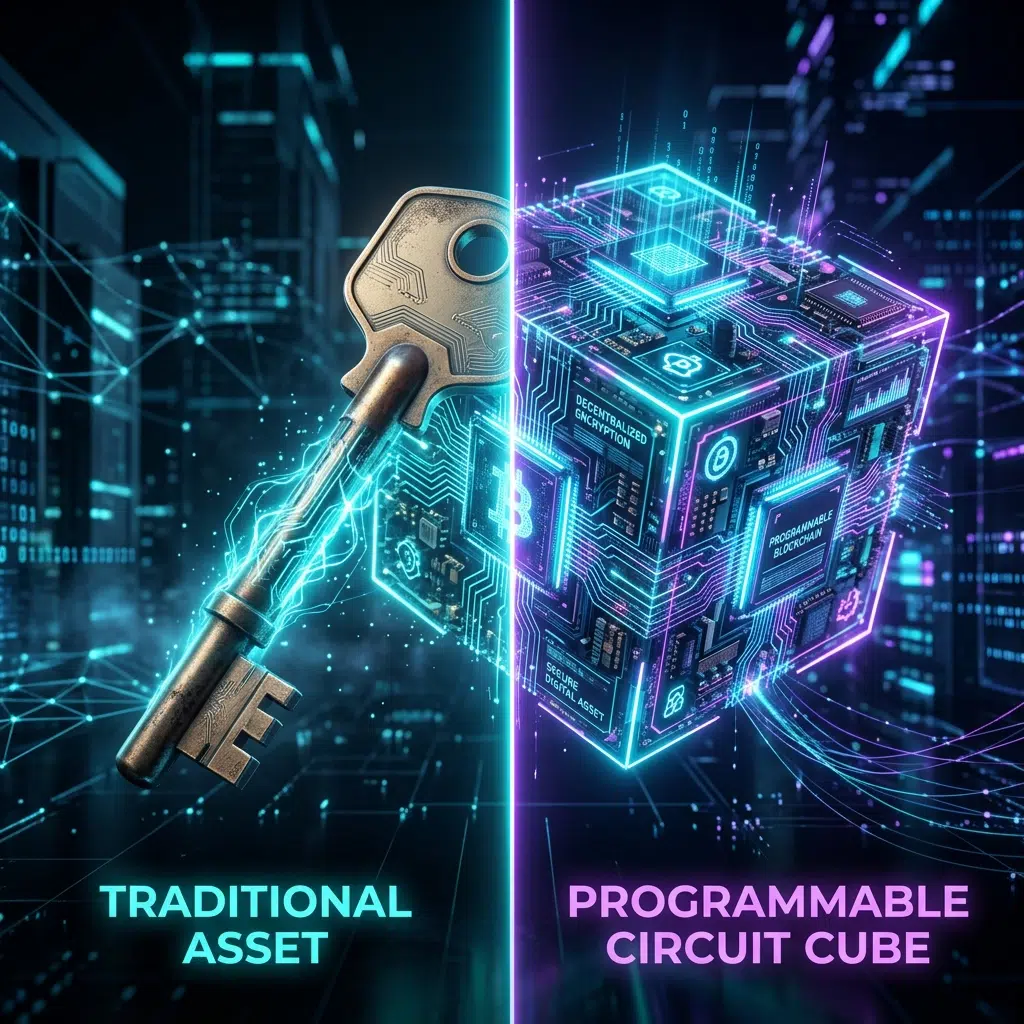
Standard Ethereum accounts, externally owned accounts, hardcode four assumptions that hurt real users daily. One key controls everything, so a lost seed phrase is a lost account, permanently, with no recovery path. Gas must be paid in the chain’s native token, so a user holding $500 of USDC but zero ETH is stranded, unable to move their own money. Every action is one transaction, so an approve-then-swap costs two signatures and two waits. And validation logic is fixed at the protocol level, so there’s no native way to add spending limits, session keys, two-factor rules or anything else a bank account has had for decades.
Smart contract wallets solved pieces of this for years, but awkwardly: they still needed an EOA somewhere to trigger them and pay gas. Account abstraction’s goal is removing the EOA from the loop entirely, and ERC-4337 is the standard that achieved it without requiring a hard fork.
How ERC-4337 works: the five moving parts
The clever trick of ERC-4337 is building a parallel transaction pipeline out of smart contracts and off-chain actors, leaving the base protocol untouched.
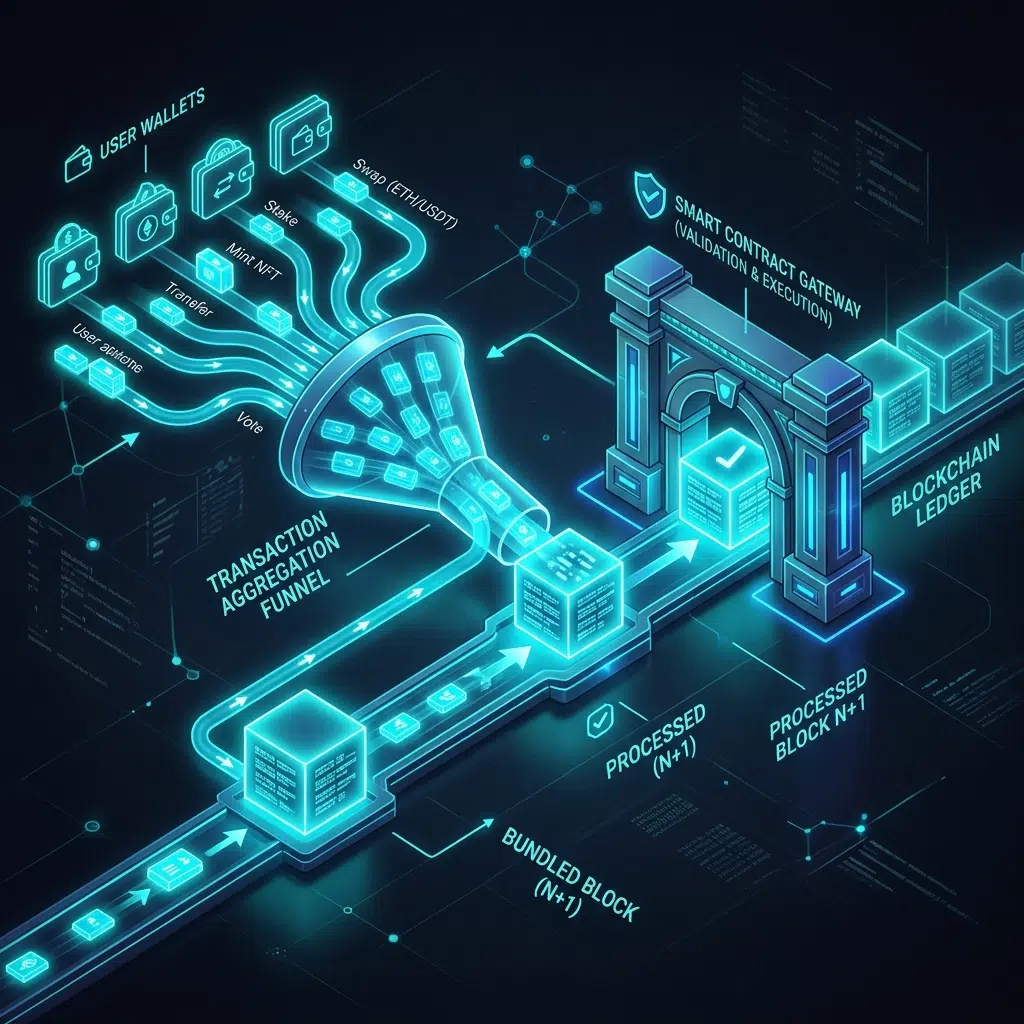
- UserOperations. Instead of a transaction, the user’s wallet produces a UserOperation, a structured intent describing what the account wants to execute, with its own gas fields and signature data. UserOps flow into their own alternative mempool, separate from the regular one.
- Bundlers. Specialized nodes watch the UserOp mempool, simulate operations to filter out ones that would fail, and package many UserOps into a single ordinary transaction. The bundler pays the gas for that transaction and gets reimbursed from the operations it carried, earning a margin for the service.
- The EntryPoint contract. One audited singleton contract per chain receives every bundle and runs the canonical two-phase flow: first verification, asking each smart account “do you approve this operation and can its gas be paid?”, then execution. Centralizing this logic in one hardened contract is what makes the whole system auditable.
- Smart accounts. The user’s wallet is a contract implementing a validation function. That function can require an ECDSA signature like a classic wallet, or a passkey from a phone’s secure enclave, or two-of-three guardians, or a session key valid only for a specific game until midnight. Validation is code now, so it’s whatever the account says it is.
- Paymasters. Optional contracts that step in during verification and say “I’ll cover the gas for this one.” This single component is where gasless UX comes from, and it deserves its own section.
Paymasters: how gasless transactions actually run
A paymaster is a contract that agrees to pay gas on behalf of users, according to whatever policy its operator programs. During verification, the EntryPoint asks the paymaster to validate the operation against its policy and lock funds for it; during execution, the paymaster settles the actual cost. Three policy patterns cover most of what’s shipping today.
Sponsorship. The app pays, the user pays nothing. This is how a game onboards a player to their first on-chain action with zero crypto in their wallet, and how consumer apps make the blockchain disappear from the experience entirely. Economically it’s customer acquisition cost, and it’s budgetable like any CAC.
Token payment. The user pays gas in an ERC-20, typically a stablecoin, and the paymaster converts. The stranded-USDC problem dies here: users hold one asset and everything works.
Conditional logic. Because the paymaster is code, policy can be arbitrarily smart: free transactions for your first week, discounts for loyal users, sponsorship only for specific contract calls. This is the layer where Luntra’s Paymaster+ operates, using behavioral analysis to drive AI-set gas policies, accepting any ERC-20 for fees, and applying dynamic discounts per user, so sponsorship budgets go where they convert instead of leaking evenly across every wallet that shows up.
What smart accounts unlock beyond gasless
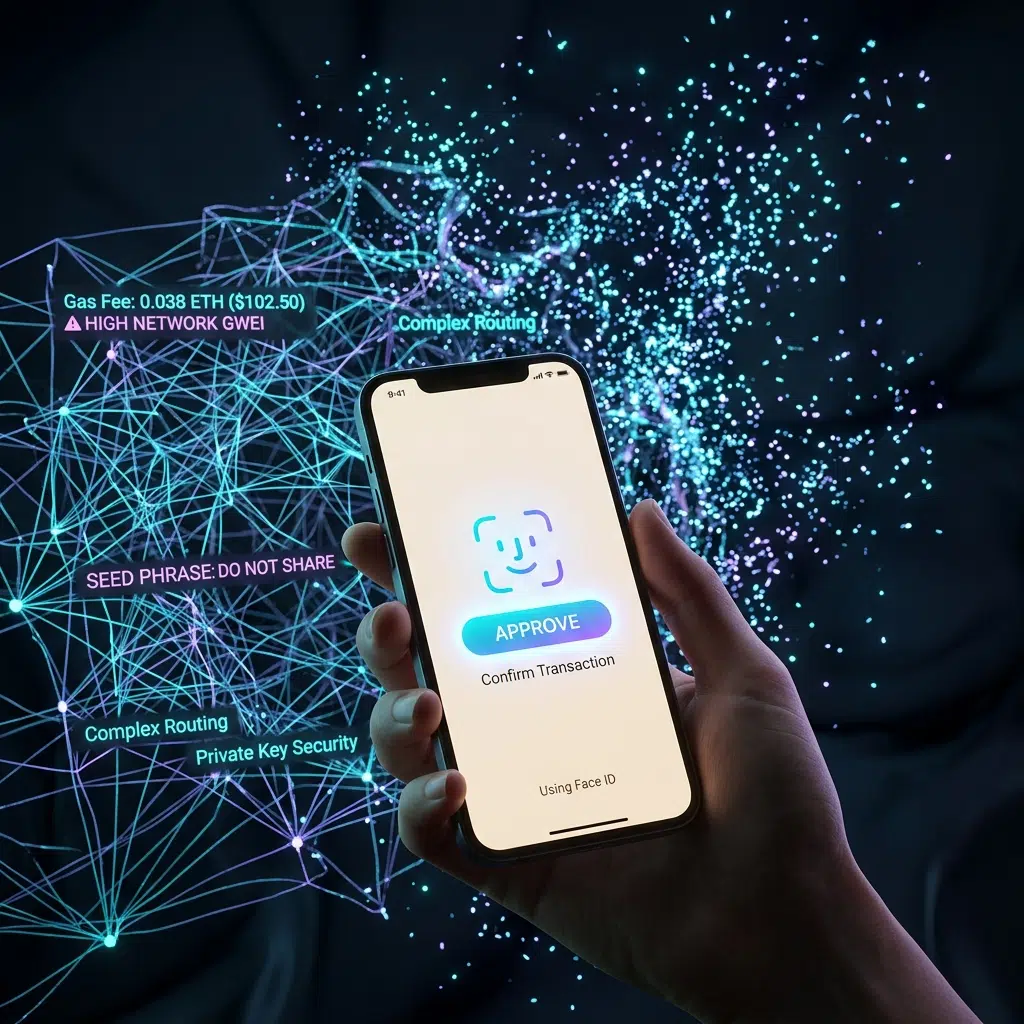
Gas sponsorship gets the headlines, but validation-as-code is the deeper change. Social recovery lets a user regain an account through guardians instead of a seed phrase, converting crypto’s scariest failure mode into a support flow. Passkey signing moves keys into phone secure enclaves, so “wallet” becomes Face ID. Session keys give a dapp scoped permission, this game, these contracts, this spending cap, this expiry, killing both the sign-every-action grind and the unlimited-approval risk in one move. And batching folds approve-plus-swap-plus-stake into one atomic operation with one signature, which is how on-chain UX finally starts resembling software.
EIP-7702: the 2025 plot twist builders should know
ERC-4337 works by putting users into new smart accounts. That left an obvious question: what about the hundreds of millions of existing EOAs? EIP-7702, shipped in Ethereum’s Pectra upgrade in May 2025, answers it by letting an EOA designate smart contract code for itself, so an ordinary wallet can behave as a smart account, gaining batching, sponsorship and programmable validation, without migrating assets to a new address.
The practical read for builders: 7702 and 4337 are complements, not rivals. 7702 upgrades the installed base of wallets in place; 4337 provides the operation pipeline, bundler market and paymaster ecosystem those upgraded accounts plug into. Stacks that target both, which is the direction wallet vendors moved through 2025 and 2026, cover essentially every user who can sign anything.
Shipping it: what this looks like in practice
For a team building today, the integration surface is smaller than the concept count suggests: pick a smart account implementation, connect to a bundler endpoint, and configure a paymaster policy, with SDKs handling UserOp construction under the hood. On Luntra, Paymaster+ ships as part of the ERC-4337 stack alongside AgentX smart wallets, so gasless flows, ERC-20 gas payment and per-user policy come as configuration rather than contract engineering, and the account abstraction pieces compose with the same infrastructure handling MEV protection and wallet intelligence. The strategic point stands regardless of stack: account abstraction is no longer a differentiator you can defer, because the first version of your app a mainstream user can actually use is the version where they never learn what gas is.
What can go wrong: the honest security notes
Account abstraction moves risk around rather than deleting it, and a builder should know where it lands. Smart accounts are contracts, so validation logic joins your audit surface; a bug in a custom validation module is a bug in every wallet using it, which is why battle-tested account implementations beat bespoke ones for almost every team. Paymasters face griefing economics: operations that pass simulation but fail on-chain can burn sponsor funds, which is what the EntryPoint’s staking and reputation rules for paymasters exist to contain, and why production paymasters enforce policy checks tighter than “looks fine.” Bundlers are an availability dependency, so relying on a single bundler endpoint is a single point of censorship or downtime; use providers with fallbacks. And session keys, wonderful as they are, are standing permissions, so scope and expiry discipline matters exactly the way API key hygiene does in web2.
None of these are arguments against shipping account abstraction. They’re the checklist that separates teams who adopted it from teams who adopted it carefully, and the ecosystem’s defaults, audited account contracts, staked paymasters, redundant bundler infra, encode the careful path already.
FAQ
What is account abstraction in one sentence?
Turning blockchain accounts from fixed keypairs into programmable smart contracts that define their own rules for signing, paying gas and recovering access.
What is a UserOperation?
The ERC-4337 equivalent of a transaction: a structured intent from a smart account, carried through a dedicated mempool, bundled by bundlers, and validated and executed via the EntryPoint contract.
How can a transaction be gasless if gas always exists?
Gas is always paid; a paymaster contract pays it instead of the user, either sponsoring it outright, charging the user in an ERC-20 like USDC, or applying conditional policy. “Gasless” describes the user experience, not the physics.
Is ERC-4337 a fork of Ethereum?
No, that’s its defining trick: the whole pipeline runs in contracts and off-chain infrastructure on top of the unchanged protocol, which is also why it deploys identically across EVM L2s.
What did EIP-7702 change?
Since the Pectra upgrade in May 2025, existing EOAs can designate contract code and act as smart accounts without migrating to a new address, bringing batching, sponsorship and programmable validation to the already-installed wallet base. It complements 4337 rather than replacing it.
Do users need to understand any of this?
That’s the point of the whole standard: they don’t. When account abstraction is done well, users see a sign-in, an approve button and their balance, and the UserOps, bundlers and paymasters stay where infrastructure belongs, out of sight.